
Consumers Are Now Choosing the Experience
Marketing Strategy

The Phygital Effect: An Interactive Blog Post Experience
Dear reader,
In these days when digital communication is increasingly conducted in a mechanical tone, the ability to transform whatever service or product we offer into an experience for the consumer is key to standing out. To explain what I mean more clearly, I shall try to demonstrate this by turning this article—which you may have come across by chance whilst browsing the market—into an experience for you...
You’re in the driving seat here, dear reader. In this blog post, you get to choose exactly what you want to read. Shall we get started, then?
Digital marketing is now extending beyond the screens of our devices; brands are no longer just running adverts, but are building an active experience for their users. Indeed, interactive adverts, gamification and phygital applications appear to have emerged as an integral part of modern marketing. So, how do you think we can best see this transformation: With TikTok’s new interactive advertising features, should we draw inspiration from the user-involving experience or from physical shops that have been transformed into experiential spaces?
Election Time:
If you’re interested in digital experiences such as ‘TikTok’s interactive ads’ → let’s meet in paragraph 2A.
If the ‘power of the in-store experience’ has caught your interest → you might like to read what I’ve said in paragraph 2B.
[2A] TikTok has developed a new tool that transforms the advertising experience for users from passive viewing into active participation: the Voting Sticker Interactive Add-on. This feature allows users to instantly click on a question displayed on screen and cast their vote whilst watching an advert; tracking the voting results creates an extra sense of engagement.
Another example that caught my attention when it comes to experiential marketing is Pizza Hut’s PAC-MAN-themed augmented reality (AR) campaign. By combining nostalgia with technology, Pizza Hut placed a QR code on a limited-edition pizza box, allowing users who scanned the box with their smartphones to play PAC-MAN. This campaign not only made the ordering experience more fun but also evoked consumers’ childhood memories, creating a strong emotional connection to the brand.
https://www.youtube.com/watch?v=5k6D5FSjusc&t=8s
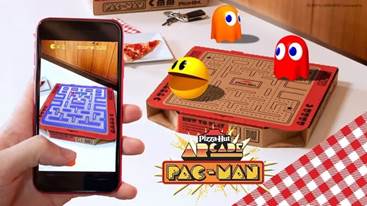
In addition, there are other tools that make the user experience more engaging: According to Vogue Business, many fashion brands are investing in AR and VR experiences and developing gamified virtual spaces: In AR, brands like Gucci, Hugo Boss, and Versace are leading the way; in VR, names like Chanel are taking the lead.
It seems that even in digital marketing, we need to go beyond the screen and incorporate physical experiences to truly connect with the consumer.
What do you think?
“Can these physical experiences be transferred to the digital realm?” → 3A
“Is there a reason why brands have become so experience-focused?” → 3B
[2B] On my last visit to the Netherlands, I had the chance to explore a Tony’s Chocolonely store. Tony’s Chocolonely has transformed the store from “just a place to buy chocolate” into a space where you can experience the story behind the brand. In fact, this store often pops up on “must-see lists” when you’re planning your trip. Inside the store, themes of sustainability and fairness are brought to life through visual and interactive elements in a compelling narrative; this allows customers to form an emotionally connected bond with the brand based on shared values while tasting the chocolate.
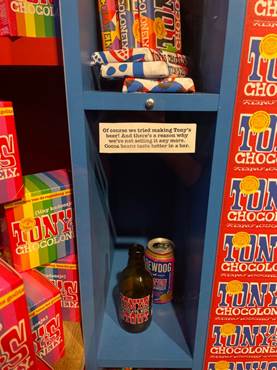
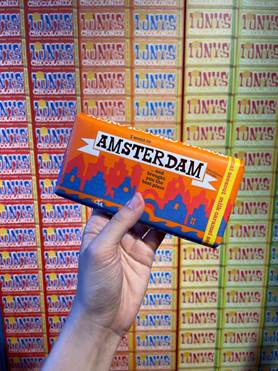
However, rather than limiting these types of experiences to a physical space, bringing them into the digital world creates far broader opportunities for brands.
What do you think?
“Can these physical experiences be brought into the digital realm?” → 3A
“Is there a reason why brands have become so experience-focused?” → 3B
[3A] Brands no longer limit the experience to just the physical space; through AR, VR, and phygital applications, they are amplifying these experiences in the digital realm. For example, Gucci offers augmented reality (AR) shoe try-ons via Snapchat, giving consumers the chance to connect with the product without visiting a store. Another successful example is IKEA, which, through its “IKEA Place” app, enables customers to visualize furniture in their own homes using augmented reality.
Nike, which has garnered attention for its work in the metaverse, created the “Nikeland” universe, allowing users to experience Nike products in the virtual world and participate in gamified activities. Coca-Cola, meanwhile, transformed the physical product experience into a sense of digital ownership through its virtual NFT collections.
It’s also possible to see how brands are adopting this experiential approach on social media:
Instagram’s augmented reality (AR) filters have given many brands—from Dior to Adidas—the opportunity to let users try on their products in a fun way.
In its new season teasers, Netflix has created personalized experiences for viewers with “Which character would you be?” quizzes.
Starbucks encouraged its customers to take photos with their coffee cups using custom filters on special occasions, thereby extending the in-store experience to the digital realm.
Such initiatives transform social media from merely a communication channel into a space for interactive, shareable, and emotionally engaging experiences with the brand.
But all this digital transformation raises a single question: What forces are driving the shift in consumer behavior that has made experiences so important? → 4A
[3B] The economy no longer creates value solely through products and services, but through experiences. In technical terms, this is referred to as the “experience economy.” Consumers aren’t just buying a cup of coffee—they’re buying into the ritual they experience at a Starbucks store; they aren’t just buying a pair of shoes—they’re buying into Nike’s story.
There is a strong psychological basis behind this trend: Neuromarketing research shows that the brain retains emotional memories associated with experiences for much longer than it does product information. Therefore, spending time with a brand through an interactive game leaves a lasting impression on the consumer’s mind, rather than simply watching an advertisement.
So, what drives brands to invest so heavily in experiences? What forces are driving the growing importance of experiences and changing consumer behavior? → 4A
[4A] The key driver behind the growing importance of experiences is the shift in consumer expectations. Today’s consumers seek not so much the functionality of a product, but rather the emotions and meaning it evokes. In saturated markets, the path to differentiation is no longer price or quality, but offering personalized, unforgettable, and shareable experiences. Thanks to digitalization, these experiences have become scalable; tools like social media, AR, and the metaverse have transformed the experience from a personal one into a story shared with the community. Neuroscience explains why this is so enduring: The brain encodes memories with high emotional intensity more strongly and retains them for longer. In other words, for the consumer, an experience with a brand is not just “that moment,” but an opportunity to build a long-term connection. This is why the future of brands is shaped not by products, but by the stories and experiences they create.
Dear reader, we’ve reached the final lines of my first article for Deeper Strategy. It has been a pleasure to guide you through this interactive blog post. Even if your product is just a blog post… as I mentioned at the beginning, transforming it into an experience for the consumer is key to standing out. That is precisely why, at Deeper Strategy, we combine experience with neuro-insights and help brands build their growth strategies around this axis. I look forward to reconnecting with you in future posts focused on growth, strategy, and neuro-insights.
Gizem Aydoğmuş
Deeper Strategy